Buy lüttich.be ?
We are moving the project
lüttich.be .
Are you interested in purchasing the domain
lüttich.be ?
domain@kv-gmbh.de · 0541-91531010
Buy lüttich.be ?
Should Poland receive reparations from Germany?
The question of whether Poland should receive reparations from Germany is a complex and sensitive issue. Poland suffered greatly during World War II, with millions of its citizens killed and its infrastructure destroyed. However, Germany has already paid significant reparations to Poland in the form of financial compensation and aid. Additionally, both countries have signed treaties and agreements that have addressed the issue of reparations. While the historical and moral arguments for reparations may be valid, it is important to consider the current relationship between the two countries and the impact that seeking further reparations could have on their diplomatic ties. Ultimately, the decision should be made through careful consideration of historical, legal, and diplomatic factors. **
Is Germany still paying reparations to Israel?
No, Germany is no longer paying direct reparations to Israel. The reparations that Germany paid to Israel were part of the Luxembourg Agreement in 1952, which provided financial compensation for Holocaust survivors and the newly established state of Israel. However, Germany continues to provide financial support to Holocaust survivors through various programs and initiatives. **


Similar search terms for Reparations
Top-Angebote
Products related to Reparations:
-
AM.PM Art mural en papier embossé, HelnHeln célèbre l’art du papier embossé, une technique artisanale qui donne vie aux formes en créant du relief. Ici, le motif répétitif touche à l’abstraction et laisse libre cours à l’imagination.Ses irrégularités et ses bords déchirés sont les témoins de la main de l’artisan. Son cadre - une caisse américaine - ajoute de la profondeur à la création. Description • Art mural réalisé en papier reliéfé embossé • Fabrication artisanale, chaque pièce est unique • Boîte américaine en pin peint en blanc • Dos en MDF • Platines pour fixation murale (vis et chevilles non fournies) Dimensions • Largeur : 70 cm • Hauteur : 90 cm • Épaisseur : 5,4 cm • BOIS ISSU DE FORÊTS GÉRÉES PLUS DURABLEMENT. Le bois certifié FSC® est issu de forêts bien gérées sur le plan environnemental, social et économique. Dimensions et poids des colis 1 colis • L98 x H8 x P79 cm, 6,5 kg111,30 €*Shipping: 3,99 €Secure redirect to the provider
-
AM.PM Art mural en verre sérigraphié, SerisHommage à l’art optique. Ce tableau est composé d’une trame graphique imprimée sur verre qui vient se superposer sur des aplats de couleur imprimés sur papier.La rencontre de ces lignes et formes géométriques crée une nouvelle gamme chromatique et donne de la profondeur au motif. Une composition vivante : sous l’effet du déplacement du regard et de la source lumineuse, se dessinent de nouvelles variations colorées. Description • Cadre en pin peint en blanc • Plaque en verre sérigraphié • Dos en MDF • Attaches pour fixation murale (vis et chevilles non fournies) Dimensions • Largeur : 50 cm • Hauteur : 50 cm • Épaisseur : 3 cm • BOIS ISSU DE FORÊTS GÉRÉES PLUS DURABLEMENT. Le bois certifié FSC® est issu de forêts bien gérées sur le plan environnemental, social et économique. Dimensions et poids des colis 1 colis • L58 x H6 x P58 cm, 3 kg60,03 €*Shipping: 3,99 €Secure redirect to the provider



-
Are reparations still being paid in Germany?
Yes, reparations are still being paid in Germany. The German government continues to make payments to individuals and organizations as restitution for the atrocities committed during the Holocaust. These payments are made to survivors, their families, and various Jewish organizations to help compensate for the loss and suffering experienced during the Nazi regime. The German government has also made efforts to provide support and assistance to Holocaust survivors in other ways, such as through social services and healthcare. **
-
Why does Poland want to receive reparations?
Poland wants to receive reparations for the damages and atrocities inflicted upon the country during World War II. This includes the destruction of cities, loss of life, and cultural heritage, as well as the suffering endured by the Polish people under Nazi occupation. Reparations are seen as a way to acknowledge and address the historical injustices that Poland faced during the war and to help in the process of healing and reconciliation. Additionally, reparations could provide financial support for the country's ongoing efforts to preserve and commemorate its history. **
-
What are the reparations payments from Germany to Poland?
The reparations payments from Germany to Poland were a result of the damages caused during World War II. In 1953, Germany agreed to pay 1 billion Deutsche Marks to Poland as reparations for the destruction caused by the war. However, this agreement did not fully compensate for the losses suffered by Poland. The issue of reparations has been a point of contention between the two countries for many years. **
-
Should Germany pay reparations to the Herero and Nama people?
Yes, Germany should pay reparations to the Herero and Nama people. The German colonial forces committed atrocities against these indigenous groups in Namibia during the early 20th century, including mass killings and forced labor. These actions resulted in the deaths of thousands of people and the displacement of many more. By acknowledging the historical injustices and providing reparations, Germany can take responsibility for its past actions and contribute to the healing and reconciliation of the affected communities. Additionally, reparations can help address the ongoing socio-economic disparities and intergenerational trauma experienced by the Herero and Nama people. **

Should the British government make reparations payments to former colonies?
The British government should consider making reparations payments to former colonies as a way to acknowledge the historical injustices and exploitation that occurred during colonial rule. Reparations could help address the lasting economic and social impacts of colonization, and contribute to the development and empowerment of these nations. However, the form and amount of reparations should be determined through dialogue and negotiation with the affected countries, taking into account their specific needs and priorities. Ultimately, reparations should be part of a broader effort to address the legacy of colonialism and promote global justice and equality. **
Why did Austria not pay reparations after the First World War?
Austria did not pay reparations after the First World War because the Treaty of Saint-Germain-en-Laye in 1919 exempted Austria from making reparations due to its economic instability and inability to pay. The treaty also dissolved the Austro-Hungarian Empire, which further weakened Austria's economy. Additionally, the Allies focused more on punishing Germany for the war and did not place as much emphasis on extracting reparations from Austria. **
Top-Angebote
Products related to Reparations:
-
HOFF Baskets Art BlueDétails produit • Usage sportswear • Talon plat • Fermeture : A lacets Composition et Entretien • Dessus/Tige : 95% cuir, 5% autres matériaux • Doublure : 100% polyester • Semelle intérieure : 80% textile, 20% eva • Semelle extérieure : 80% eva, 20% caoutchouc140,00 €*Shipping: 3,99 €Secure redirect to the provider
-
AM.PM Art mural en papier embossé, HelnHeln célèbre l’art du papier embossé, une technique artisanale qui donne vie aux formes en créant du relief. Ici, le motif répétitif touche à l’abstraction et laisse libre cours à l’imagination.Ses irrégularités et ses bords déchirés sont les témoins de la main de l’artisan. Son cadre - une caisse américaine - ajoute de la profondeur à la création. Description • Art mural réalisé en papier reliéfé embossé • Fabrication artisanale, chaque pièce est unique • Boîte américaine en pin peint en blanc • Dos en MDF • Platines pour fixation murale (vis et chevilles non fournies) Dimensions • Largeur : 70 cm • Hauteur : 90 cm • Épaisseur : 5,4 cm • BOIS ISSU DE FORÊTS GÉRÉES PLUS DURABLEMENT. Le bois certifié FSC® est issu de forêts bien gérées sur le plan environnemental, social et économique. Dimensions et poids des colis 1 colis • L98 x H8 x P79 cm, 6,5 kg111,30 €*Shipping: 3,99 €Secure redirect to the provider
-
Should Poland receive reparations from Germany?
The question of whether Poland should receive reparations from Germany is a complex and sensitive issue. Poland suffered greatly during World War II, with millions of its citizens killed and its infrastructure destroyed. However, Germany has already paid significant reparations to Poland in the form of financial compensation and aid. Additionally, both countries have signed treaties and agreements that have addressed the issue of reparations. While the historical and moral arguments for reparations may be valid, it is important to consider the current relationship between the two countries and the impact that seeking further reparations could have on their diplomatic ties. Ultimately, the decision should be made through careful consideration of historical, legal, and diplomatic factors. **
-
Is Germany still paying reparations to Israel?
No, Germany is no longer paying direct reparations to Israel. The reparations that Germany paid to Israel were part of the Luxembourg Agreement in 1952, which provided financial compensation for Holocaust survivors and the newly established state of Israel. However, Germany continues to provide financial support to Holocaust survivors through various programs and initiatives. **
-
Are reparations still being paid in Germany?
Yes, reparations are still being paid in Germany. The German government continues to make payments to individuals and organizations as restitution for the atrocities committed during the Holocaust. These payments are made to survivors, their families, and various Jewish organizations to help compensate for the loss and suffering experienced during the Nazi regime. The German government has also made efforts to provide support and assistance to Holocaust survivors in other ways, such as through social services and healthcare. **
-
Why does Poland want to receive reparations?
Poland wants to receive reparations for the damages and atrocities inflicted upon the country during World War II. This includes the destruction of cities, loss of life, and cultural heritage, as well as the suffering endured by the Polish people under Nazi occupation. Reparations are seen as a way to acknowledge and address the historical injustices that Poland faced during the war and to help in the process of healing and reconciliation. Additionally, reparations could provide financial support for the country's ongoing efforts to preserve and commemorate its history. **
Similar search terms for Reparations
-
AM.PM Art mural en verre sérigraphié, SerisHommage à l’art optique. Ce tableau est composé d’une trame graphique imprimée sur verre qui vient se superposer sur des aplats de couleur imprimés sur papier.La rencontre de ces lignes et formes géométriques crée une nouvelle gamme chromatique et donne de la profondeur au motif. Une composition vivante : sous l’effet du déplacement du regard et de la source lumineuse, se dessinent de nouvelles variations colorées. Description • Cadre en pin peint en blanc • Plaque en verre sérigraphié • Dos en MDF • Attaches pour fixation murale (vis et chevilles non fournies) Dimensions • Largeur : 50 cm • Hauteur : 50 cm • Épaisseur : 3 cm • BOIS ISSU DE FORÊTS GÉRÉES PLUS DURABLEMENT. Le bois certifié FSC® est issu de forêts bien gérées sur le plan environnemental, social et économique. Dimensions et poids des colis 1 colis • L58 x H6 x P58 cm, 3 kg60,03 €*Shipping: 3,99 €Secure redirect to the provider
-
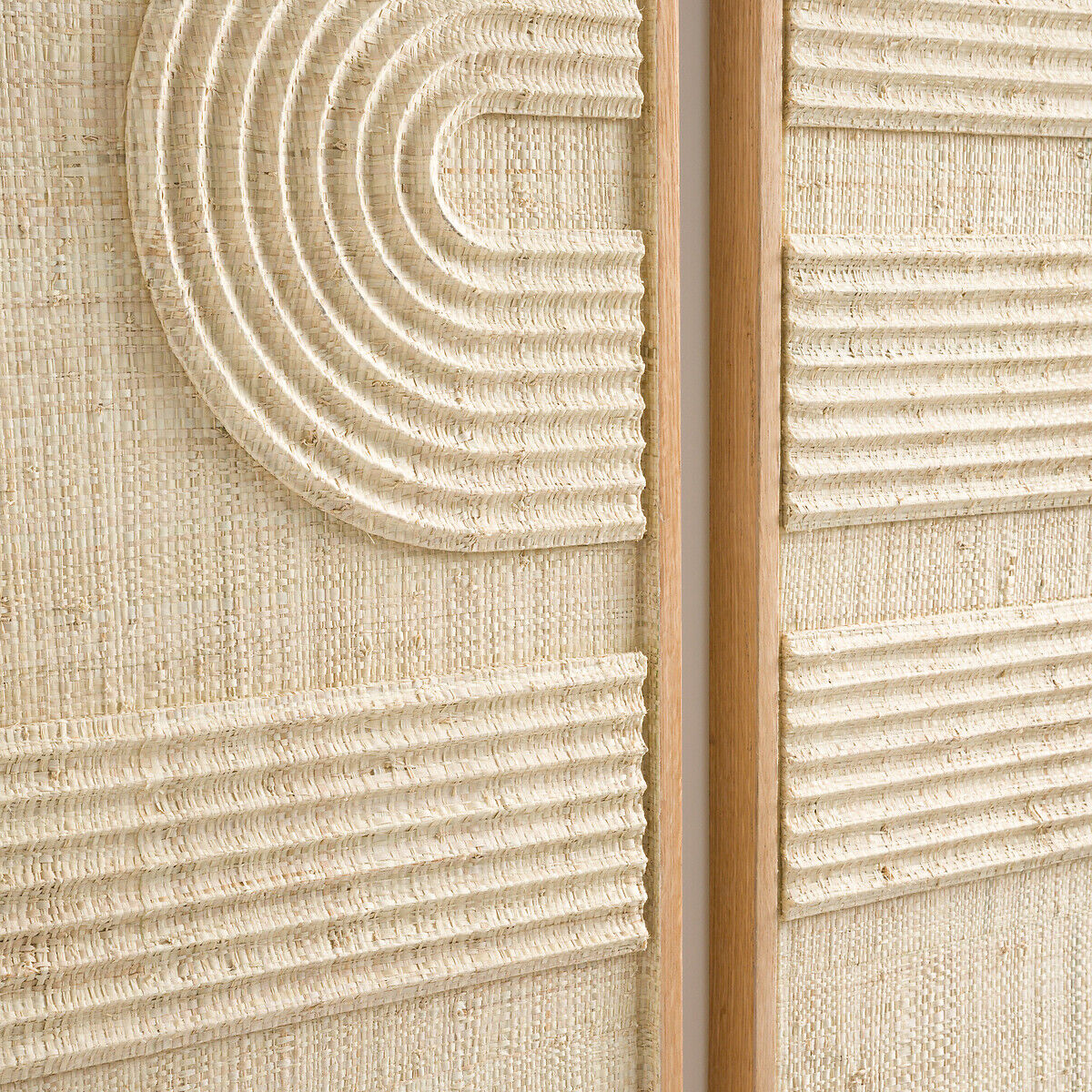
AM.PM Art mural en duo, palmier tissé, TelagaUne création contemporaine au motif abstrait et en relief. Les décorations murales Telaga présentent un motif linéaire qui se prolonge d'une toile à l'autre. Les deux tableaux sont fabriqués en feuilles de palmier tissées à la main et appliquées sur un panneau sculpté. Le tissage d’inspiration ethnique fait de chaque diptyque, des pièces uniques. Description • Feuilles de palmier tissées • Tressage artisanal fait à la main. Chaque pièce est unique • Support en MDF sculpté • Cadre en pin • Barre de fixation (vis et chevilles non fournies) • Fixation murale horizontale ou verticale Dimensions • Largeur : 60 cm • Hauteur : 120 cm • Épaisseur : 4 cm Dimensions et poids des colis 1 colis • L133 x H21 x P72 cm, 20 kg479,20 €*Shipping: 9,99 €Secure redirect to the provider
-
What are the reparations payments from Germany to Poland?
The reparations payments from Germany to Poland were a result of the damages caused during World War II. In 1953, Germany agreed to pay 1 billion Deutsche Marks to Poland as reparations for the destruction caused by the war. However, this agreement did not fully compensate for the losses suffered by Poland. The issue of reparations has been a point of contention between the two countries for many years. **
-
Should Germany pay reparations to the Herero and Nama people?
Yes, Germany should pay reparations to the Herero and Nama people. The German colonial forces committed atrocities against these indigenous groups in Namibia during the early 20th century, including mass killings and forced labor. These actions resulted in the deaths of thousands of people and the displacement of many more. By acknowledging the historical injustices and providing reparations, Germany can take responsibility for its past actions and contribute to the healing and reconciliation of the affected communities. Additionally, reparations can help address the ongoing socio-economic disparities and intergenerational trauma experienced by the Herero and Nama people. **
-
Should the British government make reparations payments to former colonies?
The British government should consider making reparations payments to former colonies as a way to acknowledge the historical injustices and exploitation that occurred during colonial rule. Reparations could help address the lasting economic and social impacts of colonization, and contribute to the development and empowerment of these nations. However, the form and amount of reparations should be determined through dialogue and negotiation with the affected countries, taking into account their specific needs and priorities. Ultimately, reparations should be part of a broader effort to address the legacy of colonialism and promote global justice and equality. **
-
Why did Austria not pay reparations after the First World War?
Austria did not pay reparations after the First World War because the Treaty of Saint-Germain-en-Laye in 1919 exempted Austria from making reparations due to its economic instability and inability to pay. The treaty also dissolved the Austro-Hungarian Empire, which further weakened Austria's economy. Additionally, the Allies focused more on punishing Germany for the war and did not place as much emphasis on extracting reparations from Austria. **
* All prices are inclusive of VAT and, if applicable, plus shipping costs. The offer information is based on the details provided by the respective shop and is updated through automated processes. Real-time updates do not occur, so deviations can occur in individual cases. ** Note: Parts of this content were created by AI.