Buy lüttich.be ?
We are moving the project
lüttich.be .
Are you interested in purchasing the domain
lüttich.be ?
domain@kv-gmbh.de · 0541-91531010
Buy lüttich.be ?
What is a unbound electron and a free electron pair?
An unbound electron is an electron that is not associated with an atom or molecule, meaning it is free to move independently. A free electron pair refers to a pair of unbound electrons that are not part of a chemical bond and are free to move around. These free electrons play a crucial role in various physical and chemical processes, such as conductivity in metals and chemical reactions. **
What is an unbound electron and a free electron pair?
An unbound electron is an electron that is not associated with an atom or molecule, meaning it is free to move independently. A free electron pair refers to two electrons that are not involved in bonding with other atoms, allowing them to move freely within a material. Both unbound electrons and free electron pairs play important roles in various physical and chemical processes, such as conducting electricity in metals or participating in chemical reactions. **


Similar search terms for Electron
Top-Angebote
Products related to Electron:
-
AM.PM Art mural en papier embossé, HelnHeln célèbre l’art du papier embossé, une technique artisanale qui donne vie aux formes en créant du relief. Ici, le motif répétitif touche à l’abstraction et laisse libre cours à l’imagination.Ses irrégularités et ses bords déchirés sont les témoins de la main de l’artisan. Son cadre - une caisse américaine - ajoute de la profondeur à la création. Description • Art mural réalisé en papier reliéfé embossé • Fabrication artisanale, chaque pièce est unique • Boîte américaine en pin peint en blanc • Dos en MDF • Platines pour fixation murale (vis et chevilles non fournies) Dimensions • Largeur : 70 cm • Hauteur : 90 cm • Épaisseur : 5,4 cm • BOIS ISSU DE FORÊTS GÉRÉES PLUS DURABLEMENT. Le bois certifié FSC® est issu de forêts bien gérées sur le plan environnemental, social et économique. Dimensions et poids des colis 1 colis • L98 x H8 x P79 cm, 6,5 kg111,30 €*Shipping: 3,99 €Secure redirect to the provider
-
AM.PM Art mural en verre sérigraphié, SerisHommage à l’art optique. Ce tableau est composé d’une trame graphique imprimée sur verre qui vient se superposer sur des aplats de couleur imprimés sur papier.La rencontre de ces lignes et formes géométriques crée une nouvelle gamme chromatique et donne de la profondeur au motif. Une composition vivante : sous l’effet du déplacement du regard et de la source lumineuse, se dessinent de nouvelles variations colorées. Description • Cadre en pin peint en blanc • Plaque en verre sérigraphié • Dos en MDF • Attaches pour fixation murale (vis et chevilles non fournies) Dimensions • Largeur : 50 cm • Hauteur : 50 cm • Épaisseur : 3 cm • BOIS ISSU DE FORÊTS GÉRÉES PLUS DURABLEMENT. Le bois certifié FSC® est issu de forêts bien gérées sur le plan environnemental, social et économique. Dimensions et poids des colis 1 colis • L58 x H6 x P58 cm, 3 kg60,03 €*Shipping: 3,99 €Secure redirect to the provider



-
When does electron absorption occur and when does electron emission occur?
Electron absorption occurs when an electron gains energy and moves to a higher energy level within an atom or molecule. This can happen when the electron absorbs a photon of light or heat energy. On the other hand, electron emission occurs when an electron loses energy and moves to a lower energy level, releasing a photon of light or heat energy in the process. This can happen when an electron is excited to a higher energy level and then returns to its original energy level. **
-
What state do particles obtain through electron uptake and electron release?
Particles obtain a charged state through electron uptake and electron release. When a particle gains an electron, it becomes negatively charged, and when it loses an electron, it becomes positively charged. This process of gaining or losing electrons is known as ionization, and it results in the formation of ions with a net positive or negative charge. **
-
What is electron migration?
Electron migration refers to the movement of electrons within a material or between different materials. This movement can occur due to an electric field, temperature gradient, or other factors that influence the flow of electrons. Electron migration is a key process in electronic devices and can impact the performance and reliability of these devices. It is important to understand and control electron migration to ensure the proper functioning of electronic systems. **
-
What is electron transfer?
Electron transfer is the movement of electrons from one atom or molecule to another. This process can occur through various mechanisms, such as oxidation-reduction reactions or in the context of electron transport chains in biological systems. Electron transfer is essential for many important processes in nature, including energy production, chemical reactions, and the functioning of biological systems. **

Why do free electron pairs require more space than bonding electron pairs?
Free electron pairs require more space than bonding electron pairs because they are not involved in forming a chemical bond and are therefore more spread out. Bonding electron pairs are shared between two atoms and are held closer together, occupying less space. Free electron pairs, on the other hand, are not constrained by a bond and repel each other, causing them to spread out and require more space. This is known as the lone pair repulsion effect. **
What is the identifying characteristic of an electron acceptor and electron donor?
The identifying characteristic of an electron acceptor is that it has the ability to gain or accept electrons during a chemical reaction. On the other hand, the identifying characteristic of an electron donor is that it has the ability to lose or donate electrons during a chemical reaction. These two roles are essential in redox reactions, where electrons are transferred from the donor to the acceptor, resulting in the conversion of chemical energy. **
Top-Angebote
Products related to Electron:
-
HOFF Baskets Art BlueDétails produit • Usage sportswear • Talon plat • Fermeture : A lacets Composition et Entretien • Dessus/Tige : 95% cuir, 5% autres matériaux • Doublure : 100% polyester • Semelle intérieure : 80% textile, 20% eva • Semelle extérieure : 80% eva, 20% caoutchouc140,00 €*Shipping: 3,99 €Secure redirect to the provider
-
AM.PM Art mural en papier embossé, HelnHeln célèbre l’art du papier embossé, une technique artisanale qui donne vie aux formes en créant du relief. Ici, le motif répétitif touche à l’abstraction et laisse libre cours à l’imagination.Ses irrégularités et ses bords déchirés sont les témoins de la main de l’artisan. Son cadre - une caisse américaine - ajoute de la profondeur à la création. Description • Art mural réalisé en papier reliéfé embossé • Fabrication artisanale, chaque pièce est unique • Boîte américaine en pin peint en blanc • Dos en MDF • Platines pour fixation murale (vis et chevilles non fournies) Dimensions • Largeur : 70 cm • Hauteur : 90 cm • Épaisseur : 5,4 cm • BOIS ISSU DE FORÊTS GÉRÉES PLUS DURABLEMENT. Le bois certifié FSC® est issu de forêts bien gérées sur le plan environnemental, social et économique. Dimensions et poids des colis 1 colis • L98 x H8 x P79 cm, 6,5 kg111,30 €*Shipping: 3,99 €Secure redirect to the provider
-
What is a unbound electron and a free electron pair?
An unbound electron is an electron that is not associated with an atom or molecule, meaning it is free to move independently. A free electron pair refers to a pair of unbound electrons that are not part of a chemical bond and are free to move around. These free electrons play a crucial role in various physical and chemical processes, such as conductivity in metals and chemical reactions. **
-
What is an unbound electron and a free electron pair?
An unbound electron is an electron that is not associated with an atom or molecule, meaning it is free to move independently. A free electron pair refers to two electrons that are not involved in bonding with other atoms, allowing them to move freely within a material. Both unbound electrons and free electron pairs play important roles in various physical and chemical processes, such as conducting electricity in metals or participating in chemical reactions. **
-
When does electron absorption occur and when does electron emission occur?
Electron absorption occurs when an electron gains energy and moves to a higher energy level within an atom or molecule. This can happen when the electron absorbs a photon of light or heat energy. On the other hand, electron emission occurs when an electron loses energy and moves to a lower energy level, releasing a photon of light or heat energy in the process. This can happen when an electron is excited to a higher energy level and then returns to its original energy level. **
-
What state do particles obtain through electron uptake and electron release?
Particles obtain a charged state through electron uptake and electron release. When a particle gains an electron, it becomes negatively charged, and when it loses an electron, it becomes positively charged. This process of gaining or losing electrons is known as ionization, and it results in the formation of ions with a net positive or negative charge. **
Similar search terms for Electron
-
AM.PM Art mural en verre sérigraphié, SerisHommage à l’art optique. Ce tableau est composé d’une trame graphique imprimée sur verre qui vient se superposer sur des aplats de couleur imprimés sur papier.La rencontre de ces lignes et formes géométriques crée une nouvelle gamme chromatique et donne de la profondeur au motif. Une composition vivante : sous l’effet du déplacement du regard et de la source lumineuse, se dessinent de nouvelles variations colorées. Description • Cadre en pin peint en blanc • Plaque en verre sérigraphié • Dos en MDF • Attaches pour fixation murale (vis et chevilles non fournies) Dimensions • Largeur : 50 cm • Hauteur : 50 cm • Épaisseur : 3 cm • BOIS ISSU DE FORÊTS GÉRÉES PLUS DURABLEMENT. Le bois certifié FSC® est issu de forêts bien gérées sur le plan environnemental, social et économique. Dimensions et poids des colis 1 colis • L58 x H6 x P58 cm, 3 kg60,03 €*Shipping: 3,99 €Secure redirect to the provider
-
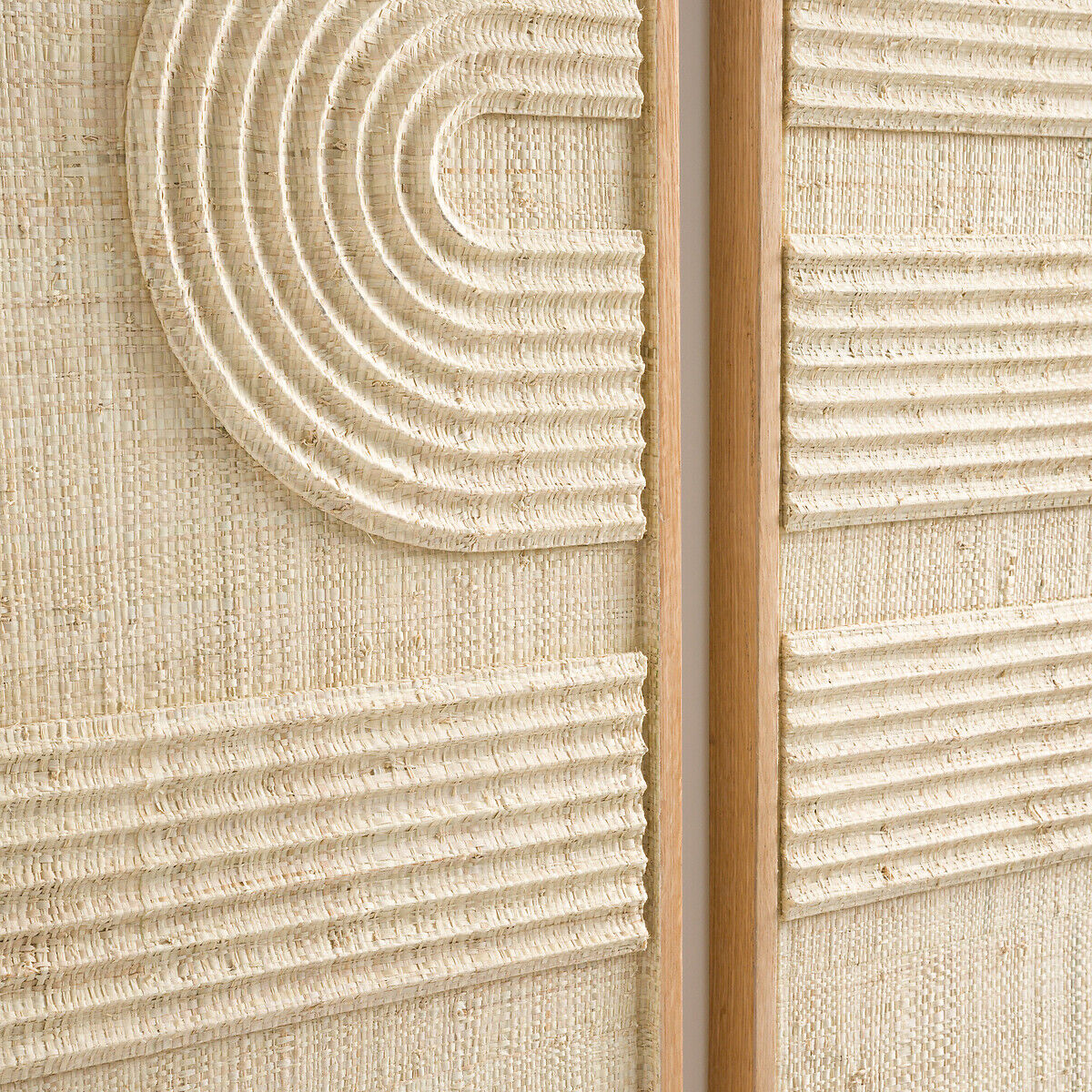
AM.PM Art mural en duo, palmier tissé, TelagaUne création contemporaine au motif abstrait et en relief. Les décorations murales Telaga présentent un motif linéaire qui se prolonge d'une toile à l'autre. Les deux tableaux sont fabriqués en feuilles de palmier tissées à la main et appliquées sur un panneau sculpté. Le tissage d’inspiration ethnique fait de chaque diptyque, des pièces uniques. Description • Feuilles de palmier tissées • Tressage artisanal fait à la main. Chaque pièce est unique • Support en MDF sculpté • Cadre en pin • Barre de fixation (vis et chevilles non fournies) • Fixation murale horizontale ou verticale Dimensions • Largeur : 60 cm • Hauteur : 120 cm • Épaisseur : 4 cm Dimensions et poids des colis 1 colis • L133 x H21 x P72 cm, 20 kg479,20 €*Shipping: 9,99 €Secure redirect to the provider
-
What is electron migration?
Electron migration refers to the movement of electrons within a material or between different materials. This movement can occur due to an electric field, temperature gradient, or other factors that influence the flow of electrons. Electron migration is a key process in electronic devices and can impact the performance and reliability of these devices. It is important to understand and control electron migration to ensure the proper functioning of electronic systems. **
-
What is electron transfer?
Electron transfer is the movement of electrons from one atom or molecule to another. This process can occur through various mechanisms, such as oxidation-reduction reactions or in the context of electron transport chains in biological systems. Electron transfer is essential for many important processes in nature, including energy production, chemical reactions, and the functioning of biological systems. **
-
Why do free electron pairs require more space than bonding electron pairs?
Free electron pairs require more space than bonding electron pairs because they are not involved in forming a chemical bond and are therefore more spread out. Bonding electron pairs are shared between two atoms and are held closer together, occupying less space. Free electron pairs, on the other hand, are not constrained by a bond and repel each other, causing them to spread out and require more space. This is known as the lone pair repulsion effect. **
-
What is the identifying characteristic of an electron acceptor and electron donor?
The identifying characteristic of an electron acceptor is that it has the ability to gain or accept electrons during a chemical reaction. On the other hand, the identifying characteristic of an electron donor is that it has the ability to lose or donate electrons during a chemical reaction. These two roles are essential in redox reactions, where electrons are transferred from the donor to the acceptor, resulting in the conversion of chemical energy. **
* All prices are inclusive of VAT and, if applicable, plus shipping costs. The offer information is based on the details provided by the respective shop and is updated through automated processes. Real-time updates do not occur, so deviations can occur in individual cases. ** Note: Parts of this content were created by AI.