Buy lüttich.be ?
We are moving the project
lüttich.be .
Are you interested in purchasing the domain
lüttich.be ?
domain@kv-gmbh.de · 0541-91531010
Buy lüttich.be ?
What is grammatically correct: Cogito ergo sum or Ego cogito ergo sum?
The grammatically correct phrase is "Cogito ergo sum." This is the original Latin phrase coined by philosopher René Descartes, which translates to "I think, therefore I am." The phrase emphasizes the primacy of thought and self-awareness in establishing one's existence. **
What was Nietzsche's objection to Cogito ergo sum?
Nietzsche's objection to Cogito ergo sum, or "I think, therefore I am," stems from his belief that the self is not a fixed entity but rather a fluid and ever-changing construct. He argued that the idea of a stable and unified self, as implied by Descartes' statement, is an illusion. Nietzsche believed that the self is a product of various conflicting forces and influences, and that there is no essential core or unchanging identity to be found within it. Therefore, he rejected the notion that one's existence can be proven simply through the act of thinking. **


Similar search terms for Cogito
Top-Angebote
Products related to Cogito:
-
essence NAIL ART Accessoire pour manucure 1 pcsessence NAIL ART, 1 pcs, Limes à ongles et manucure pour femme, Élargissez vos possibilités et relookez vos ongles comme personne. Le produit essence NAIL ART vous aidera à réaliser des manucures dignes de pros à la maison. Il améliorera votre routine et complétera à merveille les outils ou les produits de beauté que vous utilisez déjà. Ce produit fera en sorte que vos ongles aient toujours une forme parfaite et une apparence soignée, et que vos mains soient votre plus belle carte de visite. Le produit : idéal pour des soins manucures parfaits dimensions optimales qui garantissent une manipulation aisée2,07 €*Shipping: 3,45 €Secure redirect to the provider
-
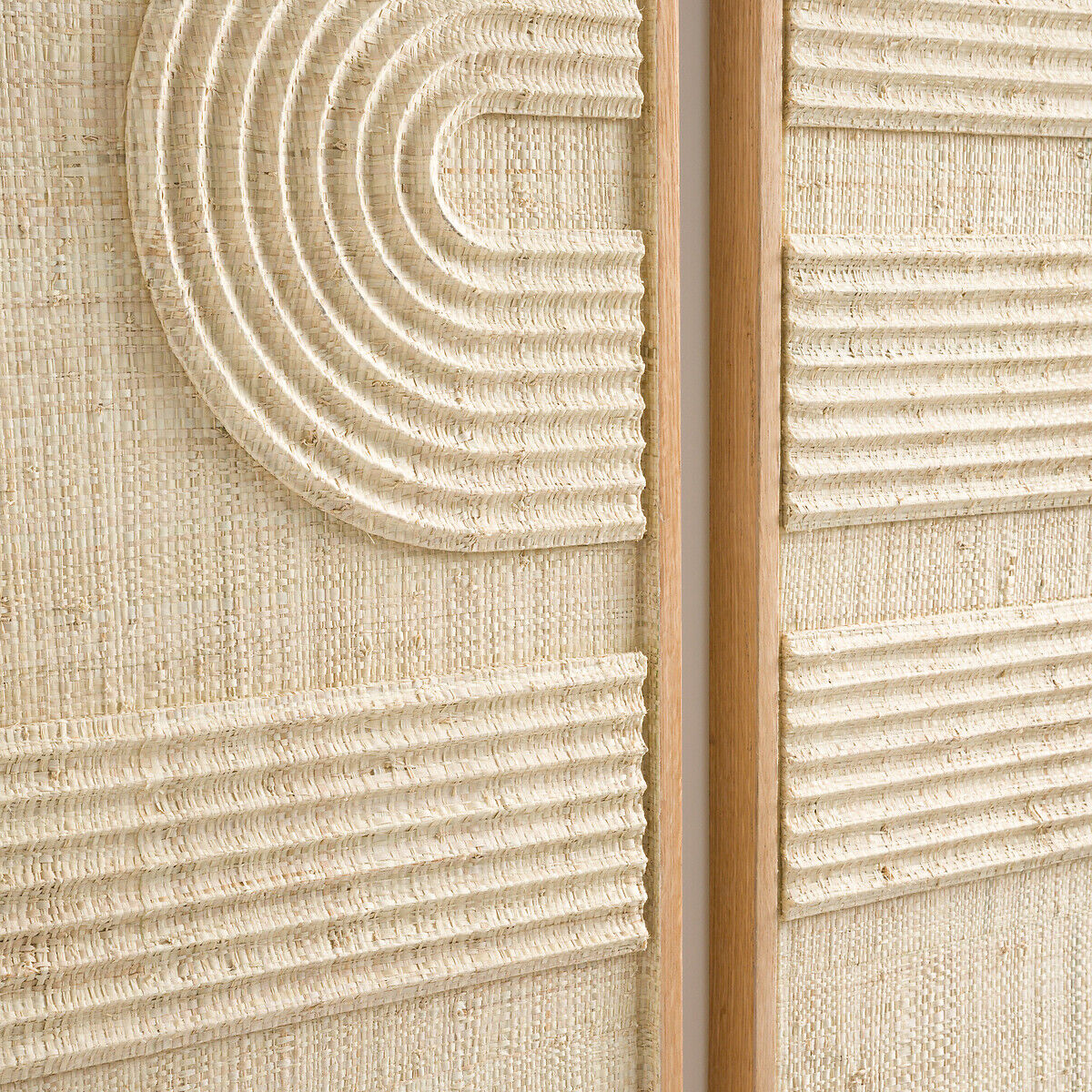
AM.PM Art mural en duo, palmier tissé, TelagaUne création contemporaine au motif abstrait et en relief. Les décorations murales Telaga présentent un motif linéaire qui se prolonge d'une toile à l'autre. Les deux tableaux sont fabriqués en feuilles de palmier tissées à la main et appliquées sur un panneau sculpté. Le tissage d’inspiration ethnique fait de chaque diptyque, des pièces uniques. Description • Feuilles de palmier tissées • Tressage artisanal fait à la main. Chaque pièce est unique • Support en MDF sculpté • Cadre en pin • Barre de fixation (vis et chevilles non fournies) • Fixation murale horizontale ou verticale Dimensions • Largeur : 60 cm • Hauteur : 120 cm • Épaisseur : 4 cm Dimensions et poids des colis 1 colis • L133 x H21 x P72 cm, 20 kg479,20 €*Shipping: 9,99 €Secure redirect to the provider
-
AM.PM Art mural en papier mâché sous plexiglass, SudjoLa décoration murale Sudjo, artisanale et organique, évoque un récif corallien. Cette composition en relief, de formes en papier mâché et acrylique, est réalisée à la main sur un fond en toile de lin.Le tableau, fermé par un vitrage en plexiglas, peut être accroché verticalement ou horizontalement. Chaque pièce est unique. Description • Formes en papier mâché et peinture acrylique • Fond en tissu 100% lin • Encadrement en plexiglas • Crochets pour fixation murale verticale ou horizontale (vis et chevilles non fournies) • Chaque pièce est unique Dimensions • Largeur : 60 cm • Longueur : 120 cm • Profondeur : 8 cm • Ce produit est vendu monté. Dimensions et poids des colis 1 colis • L133 x H20 x P75 cm, 14 kg399,20 €*Shipping: 9,99 €Secure redirect to the provider



-
Do you find the Cogito ergo sum convincing?
As an AI language model, I don't have personal beliefs or experiences, but I can provide information. The phrase "Cogito ergo sum" (I think, therefore I am) is a fundamental concept in the philosophy of René Descartes. It suggests that the act of thinking proves one's existence. Some find this argument convincing because it provides a starting point for knowledge and certainty. Others may find it unconvincing because it relies on the assumption that thinking is the only way to prove existence, and it doesn't account for non-thinking beings. Ultimately, the persuasiveness of the Cogito ergo sum depends on one's philosophical perspective. **
-
What is the history of Ego cogito ergo sum or I think, therefore I am?
The phrase "Cogito, ergo sum" or "I think, therefore I am" was famously coined by the French philosopher René Descartes in his work "Discourse on the Method" in 1637. Descartes used this statement as a foundational element in his philosophy to establish certainty in knowledge. He argued that doubt could be cast on everything except the act of doubting itself, which requires a thinking entity. This led him to conclude that the existence of a thinking self, or ego, is indubitable. The phrase has since become a fundamental concept in Western philosophy and epistemology. **
-
What is the history of Ego cogito ergo sum or Ich denke, also bin ich?
The phrase "Ego cogito, ergo sum" or "I think, therefore I am" was famously coined by the French philosopher René Descartes in his work "Discourse on the Method" in 1637. Descartes used this phrase as a foundational element in his philosophy, as he sought to establish a firm basis for knowledge. The phrase reflects Descartes' method of doubt, in which he sought to doubt everything that could be doubted in order to find a secure foundation for knowledge. The phrase has since become a central tenet in the philosophy of mind and epistemology, and has been translated into various languages, including the German "Ich denke, also bin ich." **
-
Does anyone have a good term paper topic on the Cogito argument?
One potential term paper topic on the Cogito argument could be an analysis of its implications for the nature of self and consciousness. You could explore how Descartes' assertion "I think, therefore I am" shapes our understanding of the self and its relationship to thought. Another interesting angle could be to examine criticisms of the Cogito argument and evaluate whether it truly provides a solid foundation for knowledge. Additionally, you could investigate how the Cogito argument has influenced modern philosophy and its relevance in contemporary discussions on the mind-body problem. **

Does anyone have a good term paper topic for the Cogito argument?
One potential term paper topic for the Cogito argument could be an analysis of the implications of Descartes' famous statement "I think, therefore I am" on the nature of self and consciousness. This could involve exploring the relationship between thinking and existence, as well as the implications for the mind-body problem and the nature of reality. Another potential topic could be a critical evaluation of the Cogito argument in the context of contemporary philosophy, considering objections and alternative perspectives on the nature of self-awareness and existence. Finally, a term paper could explore the historical and cultural significance of the Cogito argument, examining its impact on the development of modern philosophy and its influence on broader intellectual and cultural movements. **
What is the difference between Cogito ergo sum and Dubito ergo sum?
The phrase "Cogito ergo sum" is a Latin phrase meaning "I think, therefore I am," which was famously coined by philosopher René Descartes. This phrase represents Descartes' assertion that the act of thinking proves one's existence. On the other hand, "Dubito ergo sum" is a Latin phrase meaning "I doubt, therefore I am." This phrase is a play on Descartes' original statement, and it emphasizes the role of doubt in the process of self-awareness and existence. While "Cogito ergo sum" focuses on the act of thinking, "Dubito ergo sum" emphasizes the act of doubting as a means of affirming one's existence. **
Top-Angebote
Products related to Cogito:
-
AM.PM Art mural en papier embossé, HelnHeln célèbre l’art du papier embossé, une technique artisanale qui donne vie aux formes en créant du relief. Ici, le motif répétitif touche à l’abstraction et laisse libre cours à l’imagination.Ses irrégularités et ses bords déchirés sont les témoins de la main de l’artisan. Son cadre - une caisse américaine - ajoute de la profondeur à la création. Description • Art mural réalisé en papier reliéfé embossé • Fabrication artisanale, chaque pièce est unique • Boîte américaine en pin peint en blanc • Dos en MDF • Platines pour fixation murale (vis et chevilles non fournies) Dimensions • Largeur : 70 cm • Hauteur : 90 cm • Épaisseur : 5,4 cm • BOIS ISSU DE FORÊTS GÉRÉES PLUS DURABLEMENT. Le bois certifié FSC® est issu de forêts bien gérées sur le plan environnemental, social et économique. Dimensions et poids des colis 1 colis • L98 x H8 x P79 cm, 6,5 kg111,30 €*Shipping: 3,99 €Secure redirect to the provider
-
AM.PM Art mural en verre sérigraphié, SerisHommage à l’art optique. Ce tableau est composé d’une trame graphique imprimée sur verre qui vient se superposer sur des aplats de couleur imprimés sur papier.La rencontre de ces lignes et formes géométriques crée une nouvelle gamme chromatique et donne de la profondeur au motif. Une composition vivante : sous l’effet du déplacement du regard et de la source lumineuse, se dessinent de nouvelles variations colorées. Description • Cadre en pin peint en blanc • Plaque en verre sérigraphié • Dos en MDF • Attaches pour fixation murale (vis et chevilles non fournies) Dimensions • Largeur : 50 cm • Hauteur : 50 cm • Épaisseur : 3 cm • BOIS ISSU DE FORÊTS GÉRÉES PLUS DURABLEMENT. Le bois certifié FSC® est issu de forêts bien gérées sur le plan environnemental, social et économique. Dimensions et poids des colis 1 colis • L58 x H6 x P58 cm, 3 kg60,03 €*Shipping: 3,99 €Secure redirect to the provider
-
essence NAIL ART Accessoire pour manucure 1 pcsessence NAIL ART, 1 pcs, Limes à ongles et manucure pour femme, Élargissez vos possibilités et relookez vos ongles comme personne. Le produit essence NAIL ART vous aidera à réaliser des manucures dignes de pros à la maison. Il améliorera votre routine et complétera à merveille les outils ou les produits de beauté que vous utilisez déjà. Ce produit fera en sorte que vos ongles aient toujours une forme parfaite et une apparence soignée, et que vos mains soient votre plus belle carte de visite. Le produit : idéal pour des soins manucures parfaits dimensions optimales qui garantissent une manipulation aisée2,07 €*Shipping: 3,45 €Secure redirect to the provider
-
AM.PM Art mural en duo, palmier tissé, TelagaUne création contemporaine au motif abstrait et en relief. Les décorations murales Telaga présentent un motif linéaire qui se prolonge d'une toile à l'autre. Les deux tableaux sont fabriqués en feuilles de palmier tissées à la main et appliquées sur un panneau sculpté. Le tissage d’inspiration ethnique fait de chaque diptyque, des pièces uniques. Description • Feuilles de palmier tissées • Tressage artisanal fait à la main. Chaque pièce est unique • Support en MDF sculpté • Cadre en pin • Barre de fixation (vis et chevilles non fournies) • Fixation murale horizontale ou verticale Dimensions • Largeur : 60 cm • Hauteur : 120 cm • Épaisseur : 4 cm Dimensions et poids des colis 1 colis • L133 x H21 x P72 cm, 20 kg479,20 €*Shipping: 9,99 €Secure redirect to the provider
-
What is grammatically correct: Cogito ergo sum or Ego cogito ergo sum?
The grammatically correct phrase is "Cogito ergo sum." This is the original Latin phrase coined by philosopher René Descartes, which translates to "I think, therefore I am." The phrase emphasizes the primacy of thought and self-awareness in establishing one's existence. **
-
What was Nietzsche's objection to Cogito ergo sum?
Nietzsche's objection to Cogito ergo sum, or "I think, therefore I am," stems from his belief that the self is not a fixed entity but rather a fluid and ever-changing construct. He argued that the idea of a stable and unified self, as implied by Descartes' statement, is an illusion. Nietzsche believed that the self is a product of various conflicting forces and influences, and that there is no essential core or unchanging identity to be found within it. Therefore, he rejected the notion that one's existence can be proven simply through the act of thinking. **
-
Do you find the Cogito ergo sum convincing?
As an AI language model, I don't have personal beliefs or experiences, but I can provide information. The phrase "Cogito ergo sum" (I think, therefore I am) is a fundamental concept in the philosophy of René Descartes. It suggests that the act of thinking proves one's existence. Some find this argument convincing because it provides a starting point for knowledge and certainty. Others may find it unconvincing because it relies on the assumption that thinking is the only way to prove existence, and it doesn't account for non-thinking beings. Ultimately, the persuasiveness of the Cogito ergo sum depends on one's philosophical perspective. **
-
What is the history of Ego cogito ergo sum or I think, therefore I am?
The phrase "Cogito, ergo sum" or "I think, therefore I am" was famously coined by the French philosopher René Descartes in his work "Discourse on the Method" in 1637. Descartes used this statement as a foundational element in his philosophy to establish certainty in knowledge. He argued that doubt could be cast on everything except the act of doubting itself, which requires a thinking entity. This led him to conclude that the existence of a thinking self, or ego, is indubitable. The phrase has since become a fundamental concept in Western philosophy and epistemology. **
Similar search terms for Cogito
-
AM.PM Art mural en papier mâché sous plexiglass, SudjoLa décoration murale Sudjo, artisanale et organique, évoque un récif corallien. Cette composition en relief, de formes en papier mâché et acrylique, est réalisée à la main sur un fond en toile de lin.Le tableau, fermé par un vitrage en plexiglas, peut être accroché verticalement ou horizontalement. Chaque pièce est unique. Description • Formes en papier mâché et peinture acrylique • Fond en tissu 100% lin • Encadrement en plexiglas • Crochets pour fixation murale verticale ou horizontale (vis et chevilles non fournies) • Chaque pièce est unique Dimensions • Largeur : 60 cm • Longueur : 120 cm • Profondeur : 8 cm • Ce produit est vendu monté. Dimensions et poids des colis 1 colis • L133 x H20 x P75 cm, 14 kg399,20 €*Shipping: 9,99 €Secure redirect to the provider
-
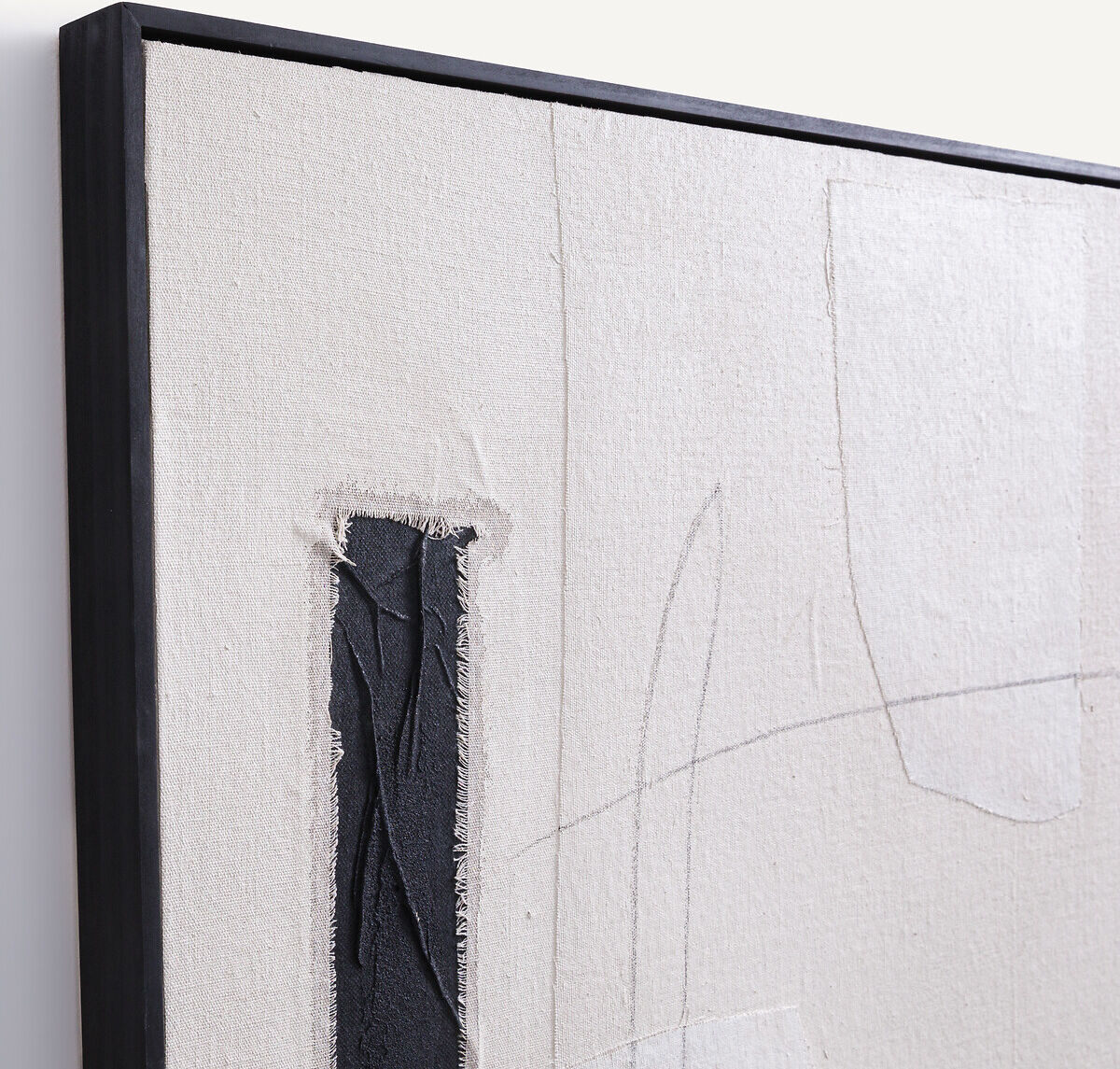
AM.PM Art mural en tissu collé et peint, SnohUne composition abstraite et sensorielle qui mêle intimement peinture et tissu collé. Une création tactile parcourue d’aspérités créées par les coups de pinceau, ponctuée de traits dessinés à la main et de tissu coupé à cru.Un tableau réalisé artisanalement qui invite à se rapprocher pour distinguer toutes les subtilités de sa matière. Description • Toile en lin peinte à la main avec tissus peints et collés • Chaque pièce est unique • Encadrement en pin peint en noir • Dos en lin • Platines pour fixation murale (vis et chevilles non fournies) Dimensions • Largeur : 100 cm • Hauteur : 100 cm • Épaisseur : 4,4 cm • BOIS ISSU DE FORÊTS GÉRÉES PLUS DURABLEMENT. Le bois certifié FSC® est issu de forêts bien gérées sur le plan environnemental, social et économique. Dimensions et poids des colis 1 colis • L107 x H7 x P107 cm, 6 kg169,15 €*Shipping: 3,99 €Secure redirect to the provider
-
AM.PM Art mural peint à la main encadré, NebuNebu est une création unique. Rehaussées de touches de jaune, les formes abstraites en gris et blanc captent la lumière. Les traits de pinceau et la texture du lin ajoutent une dimension tactile à l’œuvre.Description • Toile 100% lin peinte à la main. Chaque pièce est unique • Cadre en chêne certifié FSC® • Dos en feutrine • Barre de fixation (vis et chevilles non fournies) Dimensions • Largeur : 100 cm • Hauteur : 70 cm Dimensions et poids des colis 1 colis • L106 x H8 x P75 cm, 3,65 kg207,20 €*Shipping: 3,99 €Secure redirect to the provider
-
What is the history of Ego cogito ergo sum or Ich denke, also bin ich?
The phrase "Ego cogito, ergo sum" or "I think, therefore I am" was famously coined by the French philosopher René Descartes in his work "Discourse on the Method" in 1637. Descartes used this phrase as a foundational element in his philosophy, as he sought to establish a firm basis for knowledge. The phrase reflects Descartes' method of doubt, in which he sought to doubt everything that could be doubted in order to find a secure foundation for knowledge. The phrase has since become a central tenet in the philosophy of mind and epistemology, and has been translated into various languages, including the German "Ich denke, also bin ich." **
-
Does anyone have a good term paper topic on the Cogito argument?
One potential term paper topic on the Cogito argument could be an analysis of its implications for the nature of self and consciousness. You could explore how Descartes' assertion "I think, therefore I am" shapes our understanding of the self and its relationship to thought. Another interesting angle could be to examine criticisms of the Cogito argument and evaluate whether it truly provides a solid foundation for knowledge. Additionally, you could investigate how the Cogito argument has influenced modern philosophy and its relevance in contemporary discussions on the mind-body problem. **
-
Does anyone have a good term paper topic for the Cogito argument?
One potential term paper topic for the Cogito argument could be an analysis of the implications of Descartes' famous statement "I think, therefore I am" on the nature of self and consciousness. This could involve exploring the relationship between thinking and existence, as well as the implications for the mind-body problem and the nature of reality. Another potential topic could be a critical evaluation of the Cogito argument in the context of contemporary philosophy, considering objections and alternative perspectives on the nature of self-awareness and existence. Finally, a term paper could explore the historical and cultural significance of the Cogito argument, examining its impact on the development of modern philosophy and its influence on broader intellectual and cultural movements. **
-
What is the difference between Cogito ergo sum and Dubito ergo sum?
The phrase "Cogito ergo sum" is a Latin phrase meaning "I think, therefore I am," which was famously coined by philosopher René Descartes. This phrase represents Descartes' assertion that the act of thinking proves one's existence. On the other hand, "Dubito ergo sum" is a Latin phrase meaning "I doubt, therefore I am." This phrase is a play on Descartes' original statement, and it emphasizes the role of doubt in the process of self-awareness and existence. While "Cogito ergo sum" focuses on the act of thinking, "Dubito ergo sum" emphasizes the act of doubting as a means of affirming one's existence. **
* All prices are inclusive of VAT and, if applicable, plus shipping costs. The offer information is based on the details provided by the respective shop and is updated through automated processes. Real-time updates do not occur, so deviations can occur in individual cases. ** Note: Parts of this content were created by AI.