Buy lüttich.be ?
We are moving the project
lüttich.be .
Are you interested in purchasing the domain
lüttich.be ?
domain@kv-gmbh.de · 0541-91531010
Buy lüttich.be ?
How relevant is Aristotle today?
Aristotle's teachings and philosophies continue to be relevant today in various fields such as ethics, politics, and metaphysics. His ideas on virtue ethics, the importance of moderation, and the concept of the golden mean are still studied and applied in modern ethical discussions. Additionally, his works on logic and reasoning have had a lasting impact on the fields of philosophy and science. Overall, Aristotle's contributions to Western thought remain influential and continue to shape contemporary debates and discussions. **
What does Aristotle mean here?
In this quote, Aristotle is emphasizing the importance of developing good habits and character traits in order to achieve excellence. He is suggesting that excellence is not just a one-time act, but rather a result of consistent virtuous behavior. By cultivating virtuous habits, individuals can become excellent and achieve their full potential. Aristotle's emphasis on the importance of habits and character aligns with his broader ethical philosophy, which focuses on the development of moral virtues. **


Similar search terms for Aristotle
Top-Angebote
Products related to Aristotle:
-
AM.PM Art mural en papier embossé, HelnHeln célèbre l’art du papier embossé, une technique artisanale qui donne vie aux formes en créant du relief. Ici, le motif répétitif touche à l’abstraction et laisse libre cours à l’imagination.Ses irrégularités et ses bords déchirés sont les témoins de la main de l’artisan. Son cadre - une caisse américaine - ajoute de la profondeur à la création. Description • Art mural réalisé en papier reliéfé embossé • Fabrication artisanale, chaque pièce est unique • Boîte américaine en pin peint en blanc • Dos en MDF • Platines pour fixation murale (vis et chevilles non fournies) Dimensions • Largeur : 70 cm • Hauteur : 90 cm • Épaisseur : 5,4 cm • BOIS ISSU DE FORÊTS GÉRÉES PLUS DURABLEMENT. Le bois certifié FSC® est issu de forêts bien gérées sur le plan environnemental, social et économique. Dimensions et poids des colis 1 colis • L98 x H8 x P79 cm, 6,5 kg111,30 €*Shipping: 3,99 €Secure redirect to the provider
-
AM.PM Art mural en verre sérigraphié, SerisHommage à l’art optique. Ce tableau est composé d’une trame graphique imprimée sur verre qui vient se superposer sur des aplats de couleur imprimés sur papier.La rencontre de ces lignes et formes géométriques crée une nouvelle gamme chromatique et donne de la profondeur au motif. Une composition vivante : sous l’effet du déplacement du regard et de la source lumineuse, se dessinent de nouvelles variations colorées. Description • Cadre en pin peint en blanc • Plaque en verre sérigraphié • Dos en MDF • Attaches pour fixation murale (vis et chevilles non fournies) Dimensions • Largeur : 50 cm • Hauteur : 50 cm • Épaisseur : 3 cm • BOIS ISSU DE FORÊTS GÉRÉES PLUS DURABLEMENT. Le bois certifié FSC® est issu de forêts bien gérées sur le plan environnemental, social et économique. Dimensions et poids des colis 1 colis • L58 x H6 x P58 cm, 3 kg60,03 €*Shipping: 3,99 €Secure redirect to the provider



-
What did Aristotle mean by that?
Aristotle's statement "We are what we repeatedly do. Excellence, then, is not an act, but a habit" emphasizes the importance of consistent behavior in shaping our character and achieving excellence. He believed that our actions and habits define who we are, rather than isolated moments of success or failure. By cultivating positive habits and consistently practicing virtuous behavior, we can ultimately become better individuals and reach our full potential. **
-
What is virtue according to Aristotle?
According to Aristotle, virtue is a state of character that lies between excess and deficiency. It is the mean between two extremes, representing the balance of emotions and actions. Virtue is developed through habit and practice, leading to a virtuous life. Aristotle believed that achieving virtue is essential for living a good and fulfilling life. **
-
What did Aristotle mean by Mesotes?
Aristotle's concept of Mesotes refers to the idea of finding the middle ground or the golden mean between two extremes. He believed that virtue lies in finding a balance between excess and deficiency in our actions and emotions. By practicing moderation and avoiding extremes, one can achieve a state of moral excellence and lead a harmonious life. Aristotle emphasized the importance of self-control, reason, and balance in all aspects of life to achieve true happiness and fulfillment. **
-
What is the presentation about Aristotle?
The presentation about Aristotle focuses on his life, his contributions to philosophy, and his key ideas. It explores his works on ethics, politics, metaphysics, and logic, highlighting his influence on Western thought. The presentation also discusses Aristotle's views on virtue, the nature of reality, and the importance of reason in human life. Overall, it provides an overview of Aristotle's lasting impact on philosophy and his enduring relevance in contemporary discussions. **

Why does man need community, Aristotle?
Aristotle believed that man needs community because humans are social beings by nature. He argued that individuals are not self-sufficient and require interaction with others to fulfill their potential and achieve happiness. Community provides a sense of belonging, support, and cooperation, which are essential for personal development and the common good. Aristotle also believed that living in a community allows individuals to cultivate virtues such as justice, friendship, and compassion, which are necessary for a flourishing society. **
What basic distinctions did Aristotle make?
Aristotle made several basic distinctions in his philosophy, including the distinction between form and matter, substance and accident, potentiality and actuality, and the four causes (material, formal, efficient, and final). These distinctions helped Aristotle to develop his theory of causality and his understanding of the natural world. By categorizing and analyzing these distinctions, Aristotle laid the foundation for much of Western philosophy and science. **
Top-Angebote
Products related to Aristotle:
-
HOFF Baskets Art BlueDétails produit • Usage sportswear • Talon plat • Fermeture : A lacets Composition et Entretien • Dessus/Tige : 95% cuir, 5% autres matériaux • Doublure : 100% polyester • Semelle intérieure : 80% textile, 20% eva • Semelle extérieure : 80% eva, 20% caoutchouc140,00 €*Shipping: 3,99 €Secure redirect to the provider
-
How relevant is Aristotle today?
Aristotle's teachings and philosophies continue to be relevant today in various fields such as ethics, politics, and metaphysics. His ideas on virtue ethics, the importance of moderation, and the concept of the golden mean are still studied and applied in modern ethical discussions. Additionally, his works on logic and reasoning have had a lasting impact on the fields of philosophy and science. Overall, Aristotle's contributions to Western thought remain influential and continue to shape contemporary debates and discussions. **
-
What does Aristotle mean here?
In this quote, Aristotle is emphasizing the importance of developing good habits and character traits in order to achieve excellence. He is suggesting that excellence is not just a one-time act, but rather a result of consistent virtuous behavior. By cultivating virtuous habits, individuals can become excellent and achieve their full potential. Aristotle's emphasis on the importance of habits and character aligns with his broader ethical philosophy, which focuses on the development of moral virtues. **
-
What did Aristotle mean by that?
Aristotle's statement "We are what we repeatedly do. Excellence, then, is not an act, but a habit" emphasizes the importance of consistent behavior in shaping our character and achieving excellence. He believed that our actions and habits define who we are, rather than isolated moments of success or failure. By cultivating positive habits and consistently practicing virtuous behavior, we can ultimately become better individuals and reach our full potential. **
-
What is virtue according to Aristotle?
According to Aristotle, virtue is a state of character that lies between excess and deficiency. It is the mean between two extremes, representing the balance of emotions and actions. Virtue is developed through habit and practice, leading to a virtuous life. Aristotle believed that achieving virtue is essential for living a good and fulfilling life. **
Similar search terms for Aristotle
-
AM.PM Art mural en papier embossé, HelnHeln célèbre l’art du papier embossé, une technique artisanale qui donne vie aux formes en créant du relief. Ici, le motif répétitif touche à l’abstraction et laisse libre cours à l’imagination.Ses irrégularités et ses bords déchirés sont les témoins de la main de l’artisan. Son cadre - une caisse américaine - ajoute de la profondeur à la création. Description • Art mural réalisé en papier reliéfé embossé • Fabrication artisanale, chaque pièce est unique • Boîte américaine en pin peint en blanc • Dos en MDF • Platines pour fixation murale (vis et chevilles non fournies) Dimensions • Largeur : 70 cm • Hauteur : 90 cm • Épaisseur : 5,4 cm • BOIS ISSU DE FORÊTS GÉRÉES PLUS DURABLEMENT. Le bois certifié FSC® est issu de forêts bien gérées sur le plan environnemental, social et économique. Dimensions et poids des colis 1 colis • L98 x H8 x P79 cm, 6,5 kg111,30 €*Shipping: 3,99 €Secure redirect to the provider
-
AM.PM Art mural en verre sérigraphié, SerisHommage à l’art optique. Ce tableau est composé d’une trame graphique imprimée sur verre qui vient se superposer sur des aplats de couleur imprimés sur papier.La rencontre de ces lignes et formes géométriques crée une nouvelle gamme chromatique et donne de la profondeur au motif. Une composition vivante : sous l’effet du déplacement du regard et de la source lumineuse, se dessinent de nouvelles variations colorées. Description • Cadre en pin peint en blanc • Plaque en verre sérigraphié • Dos en MDF • Attaches pour fixation murale (vis et chevilles non fournies) Dimensions • Largeur : 50 cm • Hauteur : 50 cm • Épaisseur : 3 cm • BOIS ISSU DE FORÊTS GÉRÉES PLUS DURABLEMENT. Le bois certifié FSC® est issu de forêts bien gérées sur le plan environnemental, social et économique. Dimensions et poids des colis 1 colis • L58 x H6 x P58 cm, 3 kg60,03 €*Shipping: 3,99 €Secure redirect to the provider
-
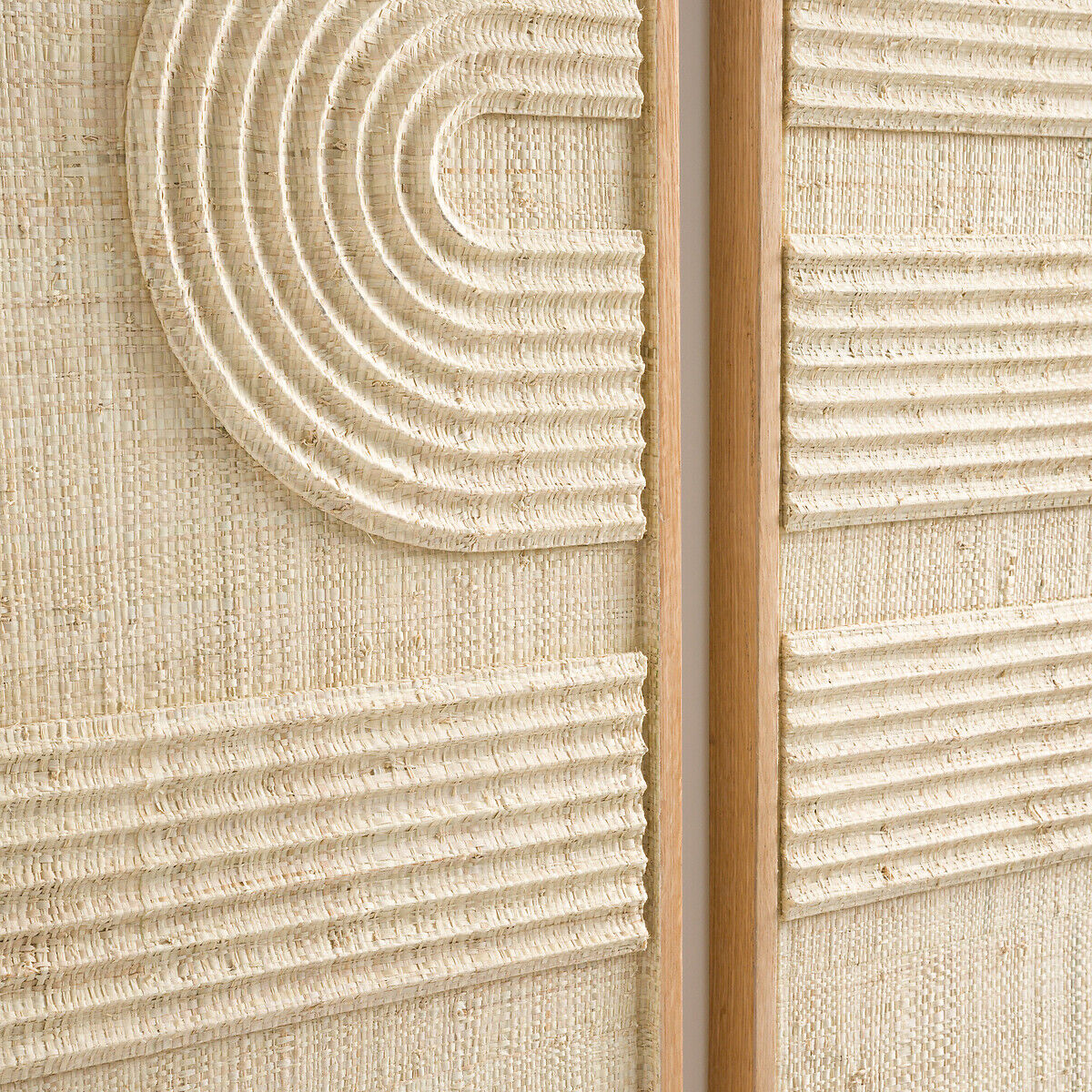
AM.PM Art mural en duo, palmier tissé, TelagaUne création contemporaine au motif abstrait et en relief. Les décorations murales Telaga présentent un motif linéaire qui se prolonge d'une toile à l'autre. Les deux tableaux sont fabriqués en feuilles de palmier tissées à la main et appliquées sur un panneau sculpté. Le tissage d’inspiration ethnique fait de chaque diptyque, des pièces uniques. Description • Feuilles de palmier tissées • Tressage artisanal fait à la main. Chaque pièce est unique • Support en MDF sculpté • Cadre en pin • Barre de fixation (vis et chevilles non fournies) • Fixation murale horizontale ou verticale Dimensions • Largeur : 60 cm • Hauteur : 120 cm • Épaisseur : 4 cm Dimensions et poids des colis 1 colis • L133 x H21 x P72 cm, 20 kg479,20 €*Shipping: 9,99 €Secure redirect to the provider
-
What did Aristotle mean by Mesotes?
Aristotle's concept of Mesotes refers to the idea of finding the middle ground or the golden mean between two extremes. He believed that virtue lies in finding a balance between excess and deficiency in our actions and emotions. By practicing moderation and avoiding extremes, one can achieve a state of moral excellence and lead a harmonious life. Aristotle emphasized the importance of self-control, reason, and balance in all aspects of life to achieve true happiness and fulfillment. **
-
What is the presentation about Aristotle?
The presentation about Aristotle focuses on his life, his contributions to philosophy, and his key ideas. It explores his works on ethics, politics, metaphysics, and logic, highlighting his influence on Western thought. The presentation also discusses Aristotle's views on virtue, the nature of reality, and the importance of reason in human life. Overall, it provides an overview of Aristotle's lasting impact on philosophy and his enduring relevance in contemporary discussions. **
-
Why does man need community, Aristotle?
Aristotle believed that man needs community because humans are social beings by nature. He argued that individuals are not self-sufficient and require interaction with others to fulfill their potential and achieve happiness. Community provides a sense of belonging, support, and cooperation, which are essential for personal development and the common good. Aristotle also believed that living in a community allows individuals to cultivate virtues such as justice, friendship, and compassion, which are necessary for a flourishing society. **
-
What basic distinctions did Aristotle make?
Aristotle made several basic distinctions in his philosophy, including the distinction between form and matter, substance and accident, potentiality and actuality, and the four causes (material, formal, efficient, and final). These distinctions helped Aristotle to develop his theory of causality and his understanding of the natural world. By categorizing and analyzing these distinctions, Aristotle laid the foundation for much of Western philosophy and science. **
* All prices are inclusive of VAT and, if applicable, plus shipping costs. The offer information is based on the details provided by the respective shop and is updated through automated processes. Real-time updates do not occur, so deviations can occur in individual cases. ** Note: Parts of this content were created by AI.