Buy lüttich.be ?
We are moving the project
lüttich.be .
Are you interested in purchasing the domain
lüttich.be ?
domain@kv-gmbh.de · 0541-91531010
Buy lüttich.be ?
How are Latin subjunctive subordinate clauses still translated with the subjunctive?
Latin subjunctive subordinate clauses are still translated with the subjunctive in English to convey the same sense of uncertainty, possibility, or doubt. In English, the subjunctive mood is used to express hypothetical or unreal situations, wishes, recommendations, or demands. Therefore, when translating Latin subjunctive subordinate clauses, the English subjunctive is used to maintain the same mood and meaning of the original Latin sentence. **
Maybe subjunctive or indicative?
The choice between subjunctive or indicative depends on the context of the sentence. The subjunctive mood is used to express doubt, uncertainty, desire, or hypothetical situations, while the indicative mood is used for statements of fact or certainty. To determine whether to use subjunctive or indicative, consider the verb's relationship to reality and whether it is expressing a fact or a possibility. **


Similar search terms for Subjunctive
Top-Angebote
Products related to Subjunctive:
-
AM.PM Art mural en papier embossé, HelnHeln célèbre l’art du papier embossé, une technique artisanale qui donne vie aux formes en créant du relief. Ici, le motif répétitif touche à l’abstraction et laisse libre cours à l’imagination.Ses irrégularités et ses bords déchirés sont les témoins de la main de l’artisan. Son cadre - une caisse américaine - ajoute de la profondeur à la création. Description • Art mural réalisé en papier reliéfé embossé • Fabrication artisanale, chaque pièce est unique • Boîte américaine en pin peint en blanc • Dos en MDF • Platines pour fixation murale (vis et chevilles non fournies) Dimensions • Largeur : 70 cm • Hauteur : 90 cm • Épaisseur : 5,4 cm • BOIS ISSU DE FORÊTS GÉRÉES PLUS DURABLEMENT. Le bois certifié FSC® est issu de forêts bien gérées sur le plan environnemental, social et économique. Dimensions et poids des colis 1 colis • L98 x H8 x P79 cm, 6,5 kg111,30 €*Shipping: 3,99 €Secure redirect to the provider
-
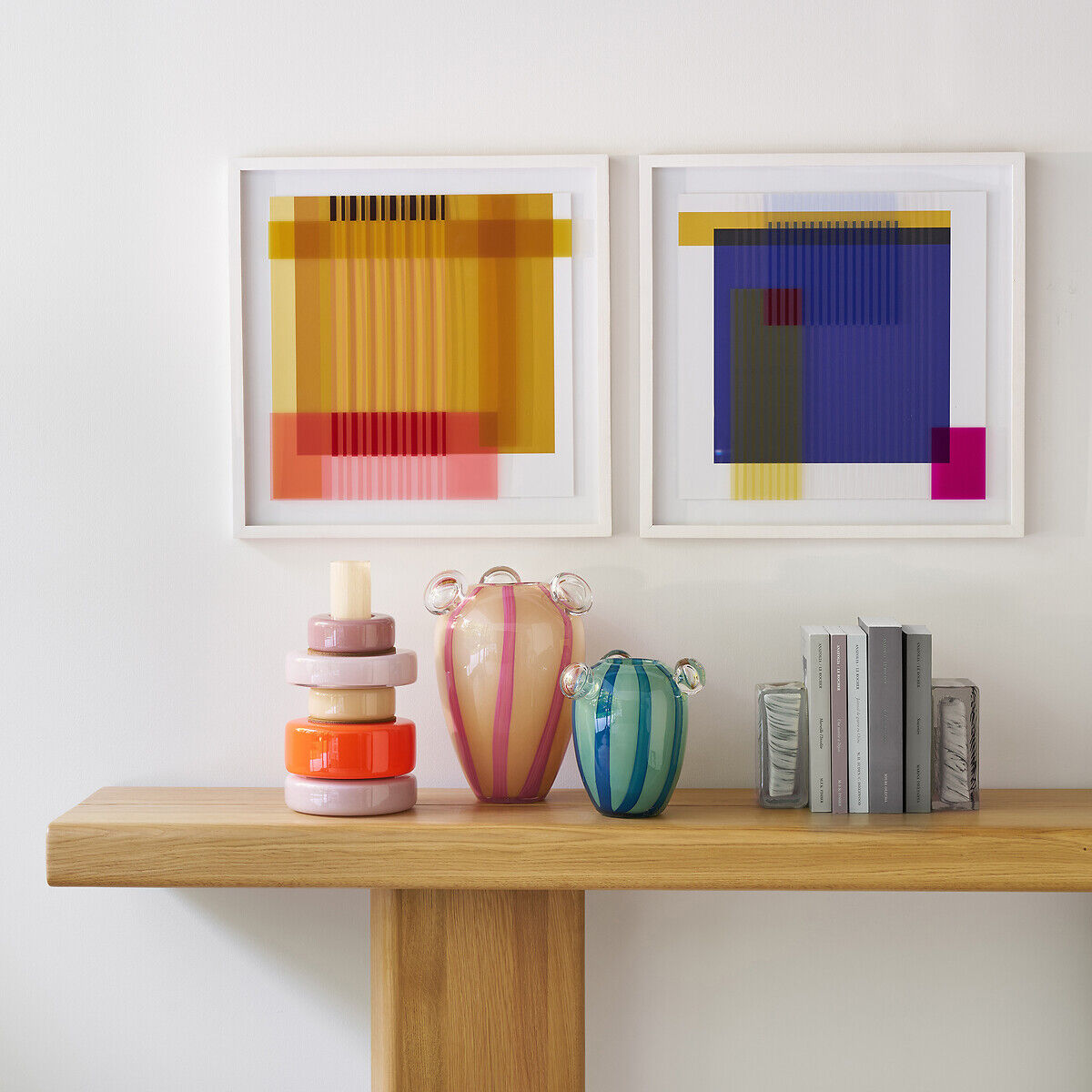
AM.PM Art mural en verre sérigraphié, SerisHommage à l’art optique. Ce tableau est composé d’une trame graphique imprimée sur verre qui vient se superposer sur des aplats de couleur imprimés sur papier.La rencontre de ces lignes et formes géométriques crée une nouvelle gamme chromatique et donne de la profondeur au motif. Une composition vivante : sous l’effet du déplacement du regard et de la source lumineuse, se dessinent de nouvelles variations colorées. Description • Cadre en pin peint en blanc • Plaque en verre sérigraphié • Dos en MDF • Attaches pour fixation murale (vis et chevilles non fournies) Dimensions • Largeur : 50 cm • Hauteur : 50 cm • Épaisseur : 3 cm • BOIS ISSU DE FORÊTS GÉRÉES PLUS DURABLEMENT. Le bois certifié FSC® est issu de forêts bien gérées sur le plan environnemental, social et économique. Dimensions et poids des colis 1 colis • L58 x H6 x P58 cm, 3 kg60,03 €*Shipping: 3,99 €Secure redirect to the provider


-
Perhaps, subjunctive or indicative?
The choice between subjunctive or indicative depends on the context of the sentence. The subjunctive mood is used to express hypothetical or uncertain situations, wishes, recommendations, or doubts. On the other hand, the indicative mood is used for statements of fact or certainty. Therefore, if the sentence is expressing a possibility, doubt, or desire, the subjunctive mood would be more appropriate. **
-
Conditional, subjunctive or indicative?
The choice between conditional, subjunctive, or indicative mood depends on the context of the sentence. The conditional mood is used to express a hypothetical situation or a condition that is dependent on something else happening. The subjunctive mood is used to express wishes, recommendations, or possibilities. The indicative mood is used to state facts or ask questions. **
-
What is the use of the present subjunctive and the past subjunctive?
The present subjunctive is used to express desires, doubts, wishes, or hypothetical situations in the present or future. It is often used after certain verbs and conjunctions that indicate uncertainty or subjectivity. The past subjunctive, on the other hand, is used to express desires, doubts, wishes, or hypothetical situations in the past. It is often used in the same way as the present subjunctive, but in reference to past events or situations. Both subjunctive forms are used to convey uncertainty or subjectivity in a sentence. **
-
Are the subjunctive I and the subjunctive II present in all tenses?
No, the subjunctive I and subjunctive II are not present in all tenses. The subjunctive I is only present in the present tense, while the subjunctive II is present in the past tense. The subjunctive I is used to express wishes, suggestions, or hypothetical situations in the present, while the subjunctive II is used to express wishes, suggestions, or hypothetical situations in the past. Each tense has its own specific form of the subjunctive mood. **

'It is strange that + subjunctive'
It is strange that she should be so calm in such a chaotic situation. **
Would we use the subjunctive?
We would use the subjunctive mood in English to express wishes, hypothetical situations, recommendations, or demands. It is used to convey uncertainty, doubt, or desire. The subjunctive is typically used after certain verbs, expressions, or conjunctions that indicate these types of situations. **
Top-Angebote
Products related to Subjunctive:
-
HOFF Baskets Art BlueDétails produit • Usage sportswear • Talon plat • Fermeture : A lacets Composition et Entretien • Dessus/Tige : 95% cuir, 5% autres matériaux • Doublure : 100% polyester • Semelle intérieure : 80% textile, 20% eva • Semelle extérieure : 80% eva, 20% caoutchouc140,00 €*Shipping: 3,99 €Secure redirect to the provider
-
AM.PM Art mural en papier embossé, HelnHeln célèbre l’art du papier embossé, une technique artisanale qui donne vie aux formes en créant du relief. Ici, le motif répétitif touche à l’abstraction et laisse libre cours à l’imagination.Ses irrégularités et ses bords déchirés sont les témoins de la main de l’artisan. Son cadre - une caisse américaine - ajoute de la profondeur à la création. Description • Art mural réalisé en papier reliéfé embossé • Fabrication artisanale, chaque pièce est unique • Boîte américaine en pin peint en blanc • Dos en MDF • Platines pour fixation murale (vis et chevilles non fournies) Dimensions • Largeur : 70 cm • Hauteur : 90 cm • Épaisseur : 5,4 cm • BOIS ISSU DE FORÊTS GÉRÉES PLUS DURABLEMENT. Le bois certifié FSC® est issu de forêts bien gérées sur le plan environnemental, social et économique. Dimensions et poids des colis 1 colis • L98 x H8 x P79 cm, 6,5 kg111,30 €*Shipping: 3,99 €Secure redirect to the provider
-
How are Latin subjunctive subordinate clauses still translated with the subjunctive?
Latin subjunctive subordinate clauses are still translated with the subjunctive in English to convey the same sense of uncertainty, possibility, or doubt. In English, the subjunctive mood is used to express hypothetical or unreal situations, wishes, recommendations, or demands. Therefore, when translating Latin subjunctive subordinate clauses, the English subjunctive is used to maintain the same mood and meaning of the original Latin sentence. **
-
Maybe subjunctive or indicative?
The choice between subjunctive or indicative depends on the context of the sentence. The subjunctive mood is used to express doubt, uncertainty, desire, or hypothetical situations, while the indicative mood is used for statements of fact or certainty. To determine whether to use subjunctive or indicative, consider the verb's relationship to reality and whether it is expressing a fact or a possibility. **
-
Perhaps, subjunctive or indicative?
The choice between subjunctive or indicative depends on the context of the sentence. The subjunctive mood is used to express hypothetical or uncertain situations, wishes, recommendations, or doubts. On the other hand, the indicative mood is used for statements of fact or certainty. Therefore, if the sentence is expressing a possibility, doubt, or desire, the subjunctive mood would be more appropriate. **
-
Conditional, subjunctive or indicative?
The choice between conditional, subjunctive, or indicative mood depends on the context of the sentence. The conditional mood is used to express a hypothetical situation or a condition that is dependent on something else happening. The subjunctive mood is used to express wishes, recommendations, or possibilities. The indicative mood is used to state facts or ask questions. **
Similar search terms for Subjunctive
-
AM.PM Art mural en verre sérigraphié, SerisHommage à l’art optique. Ce tableau est composé d’une trame graphique imprimée sur verre qui vient se superposer sur des aplats de couleur imprimés sur papier.La rencontre de ces lignes et formes géométriques crée une nouvelle gamme chromatique et donne de la profondeur au motif. Une composition vivante : sous l’effet du déplacement du regard et de la source lumineuse, se dessinent de nouvelles variations colorées. Description • Cadre en pin peint en blanc • Plaque en verre sérigraphié • Dos en MDF • Attaches pour fixation murale (vis et chevilles non fournies) Dimensions • Largeur : 50 cm • Hauteur : 50 cm • Épaisseur : 3 cm • BOIS ISSU DE FORÊTS GÉRÉES PLUS DURABLEMENT. Le bois certifié FSC® est issu de forêts bien gérées sur le plan environnemental, social et économique. Dimensions et poids des colis 1 colis • L58 x H6 x P58 cm, 3 kg60,03 €*Shipping: 3,99 €Secure redirect to the provider
-
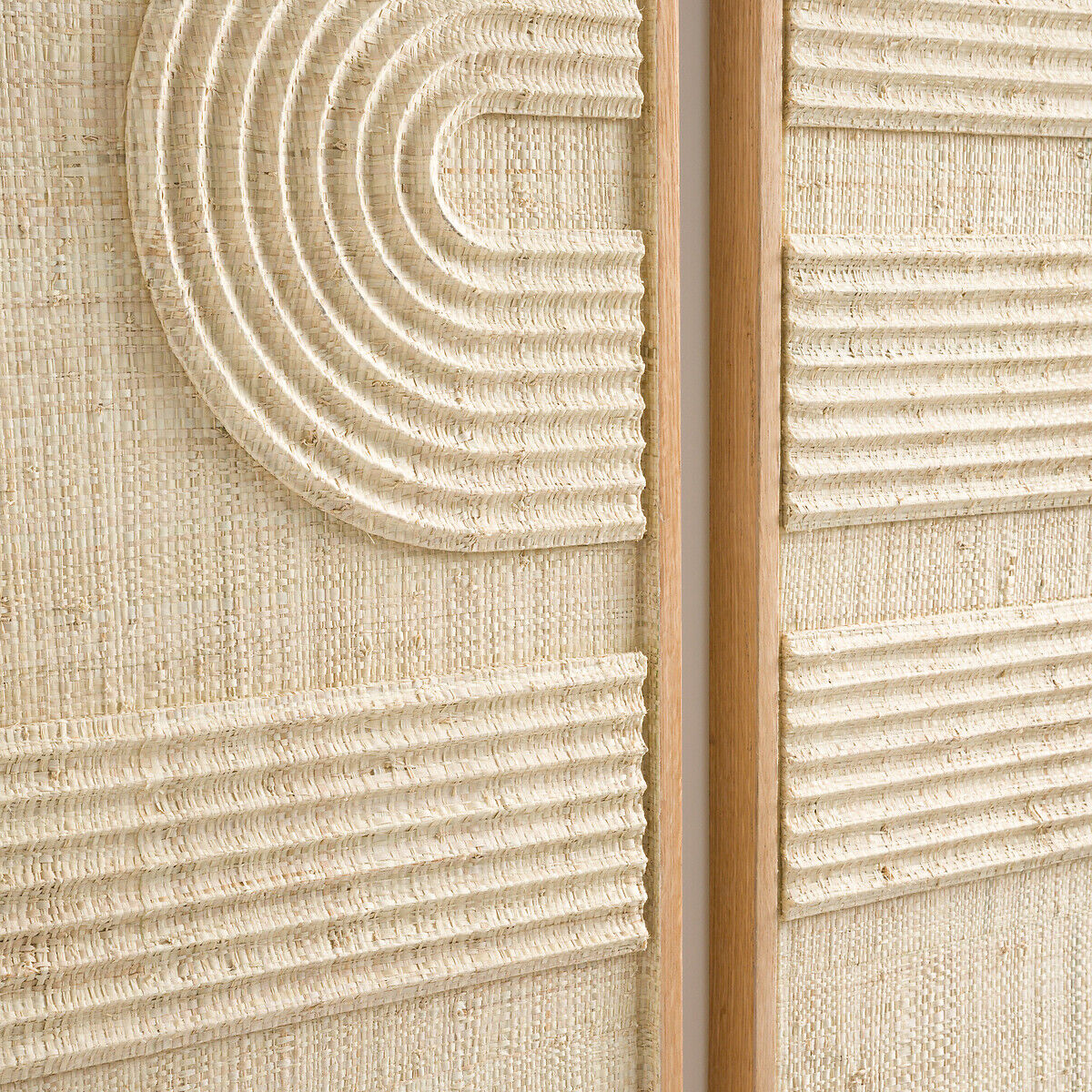
AM.PM Art mural en duo, palmier tissé, TelagaUne création contemporaine au motif abstrait et en relief. Les décorations murales Telaga présentent un motif linéaire qui se prolonge d'une toile à l'autre. Les deux tableaux sont fabriqués en feuilles de palmier tissées à la main et appliquées sur un panneau sculpté. Le tissage d’inspiration ethnique fait de chaque diptyque, des pièces uniques. Description • Feuilles de palmier tissées • Tressage artisanal fait à la main. Chaque pièce est unique • Support en MDF sculpté • Cadre en pin • Barre de fixation (vis et chevilles non fournies) • Fixation murale horizontale ou verticale Dimensions • Largeur : 60 cm • Hauteur : 120 cm • Épaisseur : 4 cm Dimensions et poids des colis 1 colis • L133 x H21 x P72 cm, 20 kg479,20 €*Shipping: 9,99 €Secure redirect to the provider
-
What is the use of the present subjunctive and the past subjunctive?
The present subjunctive is used to express desires, doubts, wishes, or hypothetical situations in the present or future. It is often used after certain verbs and conjunctions that indicate uncertainty or subjectivity. The past subjunctive, on the other hand, is used to express desires, doubts, wishes, or hypothetical situations in the past. It is often used in the same way as the present subjunctive, but in reference to past events or situations. Both subjunctive forms are used to convey uncertainty or subjectivity in a sentence. **
-
Are the subjunctive I and the subjunctive II present in all tenses?
No, the subjunctive I and subjunctive II are not present in all tenses. The subjunctive I is only present in the present tense, while the subjunctive II is present in the past tense. The subjunctive I is used to express wishes, suggestions, or hypothetical situations in the present, while the subjunctive II is used to express wishes, suggestions, or hypothetical situations in the past. Each tense has its own specific form of the subjunctive mood. **
-
'It is strange that + subjunctive'
It is strange that she should be so calm in such a chaotic situation. **
-
Would we use the subjunctive?
We would use the subjunctive mood in English to express wishes, hypothetical situations, recommendations, or demands. It is used to convey uncertainty, doubt, or desire. The subjunctive is typically used after certain verbs, expressions, or conjunctions that indicate these types of situations. **
* All prices are inclusive of VAT and, if applicable, plus shipping costs. The offer information is based on the details provided by the respective shop and is updated through automated processes. Real-time updates do not occur, so deviations can occur in individual cases. ** Note: Parts of this content were created by AI.